
A healthy, vibrant environment where nature can flourish is essential to protecting our valuable water sources.
We are a significant landowner in the South East, owning or managing 33 sites of Special Scientific Interest, a National Nature Reserve, two local nature reserves and numerous Areas of Outstanding Natural Beauty.
In 2020 we embarked on an ambitious five-year programme to identify improvements to company-owned sites to increase biodiversity across our estate.
At the start of this period we were actively managing 54 per cent of our company-owned land for biodiversity and had a target to increase this to 67 per cent. We managed to exceed this target and by the end of the period we increased the amount of land managed for biodiversity to 77 per cent.
A total of 214 sites covering 1,672 hectares were surveyed over the five years. 56 sites were resurveyed in year four and five to measure the effect of the new management practices and every one had delivered biodiversity gains.
Much of this work was informed by extensive investigations on our sites carried out between 2015 and 2020.
How have we done so far?
We collaborate with others to achieve our environmental goals, including the British Trust for Conservation Volunteers, Natural England, local wildlife and river trusts, and National Park authorities.
Our video explains how we're boosting biodiversity on our sites, from working with partners to reintroduce declining species such as Wart-biter crickets and water voles into their natural habitats to land management, encouraging butterflies and bats to the area.
Highlights of our 2020-2025 activity
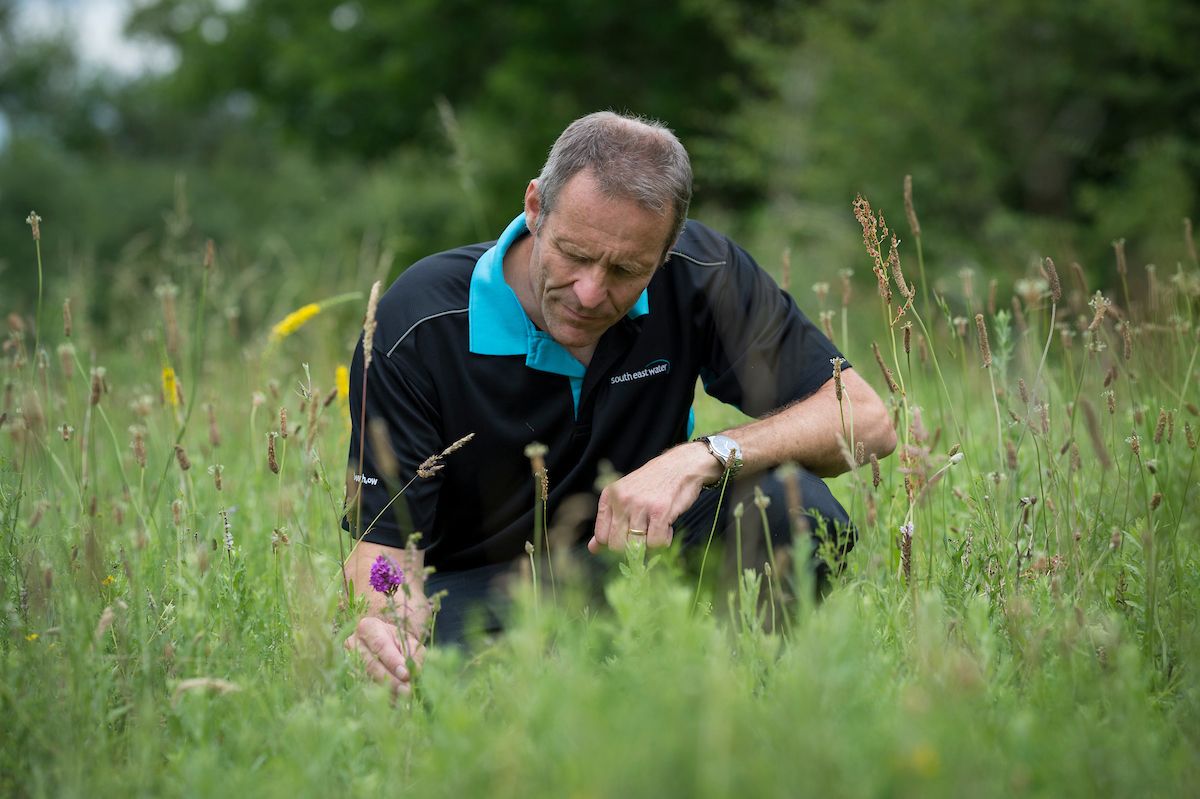
- We've helped wildflowers grow by changing how we manage some of our grasslands. This involves 'cut and collect' regimes and planting yellow rattle, which naturally reduces how vigorously the grass grows. The wildflowers that establish provide essential nectar and pollen for important insects like bees and butterflies. Plus, by leaving some vegetation longer, we create a more varied and safe home for other invertebrates and small mammals.
- We've restored old, gappy hedges and created new ones by planting around 550 metres of native hedgerow species. This boosts biodiversity and creates vital 'corridors' so wildlife can easily find shelter, food, and mates.
- We've started regularly coppicing hazel at lots of our sites and have licenses to coppice mature chestnut and hornbeam at others. This work is helping us restore woodland rides and create new open spaces in our woodlands which benefits biodiversity.
- We're actively tackling Invasive Non-Native Species (INNS) like Himalayan balsam, variegated yellow archangel, and giant hogweed. These plants are very persistent and the control work will continue well into the future. We're also removing other INNS such as bamboo, cherry laurel, cotoneaster, and rhododendron from our sites, though we sometimes keep them where they're being used for screening.
- We’ve installed owl boxes, tern rafts, and an artificial Sand Martin nest, all but the latter are being used by the target species.
- Leaky woody dams are a good way to slow down water flow. We have introduced them to some streams in Kent which help to reduce the risk of flooding downstream.
- Yellow rattle is a semi-parasitic wildflower which feeds off the roots of grasses. We have used this successfully at a number of sites to reduce grass vigour by up to 60% which has made more room for wildflowers to establish.
- To improve efficiency when managing sites, we bought a Stella URS 100 tracked remote-controlled hydraulic brushcutter. It is remote controlled which means members of our Environment Team can safely cut grass on steep reservoir banks and manage areas of dense scrub in the winter months
What's next? Our plans for 2025-2030
We are now working on our next five-year programme running from 2025 to 2030 with a target of increasing the amount of company-owned land managed for biodiversity to 80 per cent. Alongside this we will continue our work to further increase biodiversity gains on the areas already being managed.
Restoring filled or buried ponds
Old maps have been used to identify ‘ghost’ ponds on our land, which are old ponds that have been filled in or buried. Restoring these can help increase biodiversity and plans are underway to restore a dew pond in the South Downs National Park.
Using Exmoor ponies to restore chalk grassland in East Sussex
We are sponsoring Longbridge Regenerative’s innovative five-year grazing project using Exmoor ponies to restore 181.3 hectares of chalk grassland, improving biodiversity and safeguarding groundwater quality. Chalk grassland is not only a haven for rare wildflowers and insects but has also been identified as one of the most beneficial habitats for maintaining groundwater. By enhancing these landscapes, the project will support local wildlife and contribute to the sustainable management of the region’s water resources. Find out more about this project here.
Creating safe passage for eels in East Sussex and Buckinghamshire
We are involved in projects to create or improve elver passes in the river Thames and Cuckmere. Elvers are part of the eel lifecycle and elver passes make it easier for them to travel up rivers to find habitats and food where they will then turn into yellow eels.
Working to increase the breeding numbers of swifts, swallows and martins across our sites
We are working to improve the outcomes for Swift, Swallow, House Martin and Sand Martins. The RSPB reports there is a rapid decline of these birds, with less breeding within the UK each year. We will assess the use of pre-installed artificial nests on company sites to see how effective they have been and will also explore what improvement measures could be put in place to improve breeding successes on company landholdings. This will include investigating what factors may have changed, such as mud availability due to land use change locally or drier springs/summers, collapsing food chains, or issues on migration or at overwinter locations further afield.
This work includes the installation of artificial Sand Martin nesting banks at Arlington reservoir and House Martin nesting towers at Arlington and Barcombe reservoirs. We are also funding 125 safe, durable nest sites for House Martins on eligible homes and schools in the South East Water supply area, to help them breed successfully. Hampshire Ornithological Society (HOS) is trialling the artificial nest cup scheme, with partners Nest Cup Box and Hampshire Swifts, funded by us. Homeowners in and around Basingstoke, Alton, Aldershot, Farnborough, Fleet, Bordon and Petersfield are invited to take part. Find out more about applying for a nest box.
Investigating the effect of land use in East Sussex.
In the Seaford and Eastbourne catchments we are investigating land use adjacent to company-owned land and how potential changes in its use could improve both water quality and biodiversity.